

Blog / B2B Visibility
Why Your B2B Business Is Invisible Online, and How to Fix It Without an Agency
Most B2B businesses that are not getting enough enquiries are not worse than their competitors, they are less visible. An unclear website, services that are not explained, no consistent content and an inactive LinkedIn presence are the usual reasons.
Your business is good at what it does. Your clients are happy. Your work is solid. The people who know you, trust you.
But the phone is not ringing the way it should be. New enquiries are quieter than you would like. And when you look at competitors who are winning work you should be winning, you cannot quite understand why, because you know you are better.
The answer is almost always the same. They are not better. They are just more visible. And in 2026, visible wins.
The Visibility Gap Nobody Talks About
There is a gap that exists in almost every B2B sector in the UK and most business owners do not fully see it until it starts to hurt.
On one side are businesses that are genuinely excellent at what they do: experienced, credible, with real results for real clients. On the other side are businesses that are consistently visible online: easy to find, easy to understand and easy to trust before a conversation ever begins.
The businesses that win the most new enquiries are rarely the most technically impressive. They are the ones buyers can find, understand and feel confident about before picking up the phone.
That is the visibility gap, and it is the reason good businesses lose work to competitors they are objectively better than every single day.
Why Being Good Is Not Enough Anymore
Ten years ago, being excellent at what you do and maintaining a reasonable network was enough for most B2B businesses to stay busy. Referrals came in. Existing clients stayed. The occasional event kept the pipeline moving.
That still works to some extent. But it is no longer the whole picture.
The buying process has changed. Before a buyer makes contact with any supplier, even one that has been referred to them, they research online. They look at your website. They check your LinkedIn. They search your business name to see what comes up. They might ask ChatGPT for options in your sector.
If what they find is clear, current and credible, that impression is positive and the enquiry is more likely. If what they find is an outdated website and an empty LinkedIn page, doubt creeps in. And uncertain buyers often end up choosing the supplier that looked more visible and easier to understand.
The Referral Myth
Referrals are brilliant. There is nothing more powerful than a warm recommendation from a trusted contact.
But there is a myth around referrals that is quietly causing problems for a lot of B2B businesses. The myth is that a good referral will carry itself. That the recommendation is enough. That is not how most referrals work anymore.
When someone is referred to your business today, the first thing most of them do is search for you online. They visit your website. They check your LinkedIn. They look for reviews or case studies. They try to build a picture of who you are before they decide whether the referral is worth following up.
A clear website, a LinkedIn profile with recent posts and some evidence of expertise reinforces the recommendation. An outdated website and a LinkedIn profile with no activity introduces doubt. Your online presence does not just attract new buyers. It also converts the ones who have already been pointed in your direction.
What Buyers Actually Do Before They Contact a Supplier
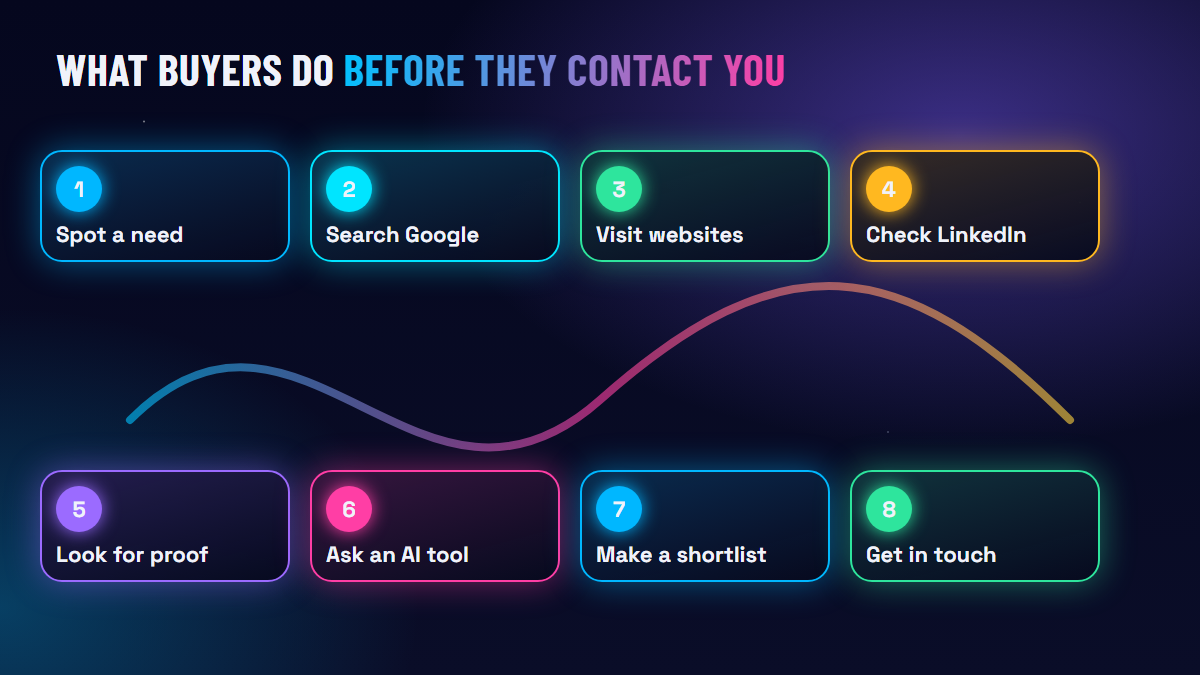
A buyer recognises a problem or a need. They search Google for options and advice. They visit two or three websites and form quick impressions. They check LinkedIn, both the company page and often the personal profile of the person they would be working with. They look for reviews, case studies or evidence of track record. They might ask an AI tool like ChatGPT for recommendations. They create a mental shortlist of credible looking options. Then they make contact.
At almost every stage of that process, your business either appears and looks credible or it does not. The businesses that show up consistently across multiple stages are the ones that end up on the shortlist.
The Four Things Holding Most B2B Businesses Back Online
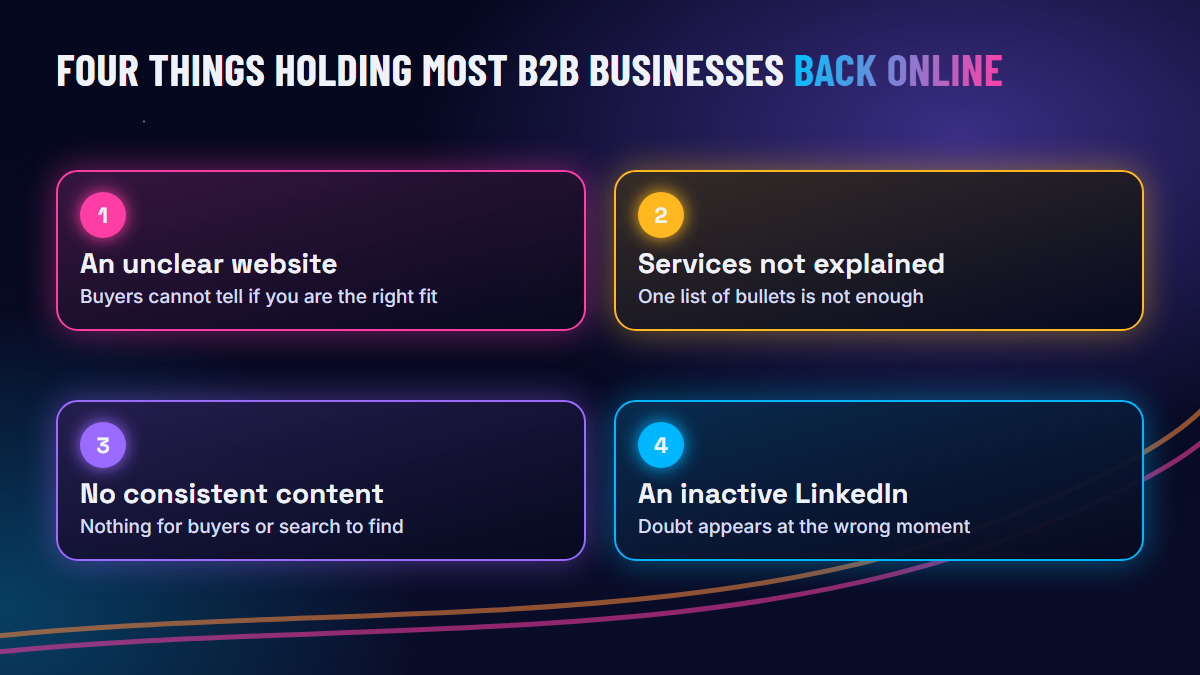
In over fourteen years of working with B2B businesses, the same four things come up again and again.
An unclear website
Most B2B websites are built to impress rather than to inform. They contain vague language, generic claims about quality and very little specific information about what the business actually does, who it works with and what makes it worth choosing. A buyer who cannot quickly understand whether you are the right fit will leave within seconds.
Services that are not properly explained
A single services page with a list of bullet points is not enough. Each core service your business offers should ideally have its own dedicated page explaining what it involves, who it is for, what the typical process looks like and what results clients can expect.
No consistent content being published
A business that publishes nothing online, with no blog posts, no LinkedIn activity and no FAQs, gives buyers and search engines nothing to find. You might be extraordinarily knowledgeable about your sector but if that knowledge is not visible anywhere online, it does not help buyers decide whether to trust you.
An inactive LinkedIn presence
For B2B businesses, LinkedIn is one of the first places buyers check when evaluating a supplier. A LinkedIn page that has not been updated in eighteen months signals that the business may not be active or engaged. It raises doubt at exactly the moment you want buyers to feel confident.
What Fixing It Actually Looks Like
Improving your online visibility does not require a large marketing budget or an expensive agency. It requires clarity, consistency and a realistic commitment to showing up regularly in the places buyers are already looking.
A website that works for buyers, not just for you
Go to your own website homepage right now and read it as if you know nothing about your business. Can you tell within ten seconds exactly what the company does, who it helps and how to get in touch? Are there clear explanations of your services? Are there case studies or testimonials? Is there an FAQ that answers the questions buyers genuinely have? If the answer to any of those is no, that is where to start.
LinkedIn activity that demonstrates expertise
Two posts per week on LinkedIn, writing about the problems you solve, the questions your clients ask and the observations you make about your sector, is enough to build meaningful visibility over time. Not immediately. Not after a week. But consistently, over months, it creates the familiarity and credibility that leads buyers to choose you.
Content that answers the questions buyers are asking
Every question a buyer asks before working with you is a piece of content. A blog post. An FAQ answer. A LinkedIn post. Published content that addresses the specific things your ideal clients want to know builds your visibility in search, in AI search tools and in the minds of buyers who find it useful.
Consistency over perfection
The biggest mistake most B2B businesses make with their online presence is aiming for perfect and producing nothing. A decent post twice a week will always outperform a brilliant post once a month.
Why Smaller B2B Businesses Can Win This
It is easy to assume that larger competitors have the advantage when it comes to online visibility. They have bigger teams, larger budgets and more established brand recognition.
But online visibility is not simply a function of size. Smaller, owner led businesses can often move faster. They can publish content that sounds like a real person. They can be specific about who they help without waiting for sign off from multiple stakeholders.
Many larger competitors still have outdated websites and LinkedIn pages that have not been touched in months. That creates a real opening. A smaller B2B business that consistently explains what it does and shows up regularly online can look more active, more credible and more worth contacting than a larger competitor that says very little.
The One Thing That Stops Most Business Owners
You already know everything in this guide is worth doing. The problem is not knowledge. It is time.
Running a B2B business leaves very little room for creating and publishing content consistently. LinkedIn posts get started and abandoned. Blog ideas get noted down and never written. The website update that was going to happen in January is still waiting in September.
That is the capacity problem that most business owner content advice completely ignores, and it is the reason ThinkOnce exists.
Done for You, Every Month
ThinkOnce creates and publishes LinkedIn content for owner led B2B businesses, built around your business and published consistently every month, so your business stays visible to the right buyers even when you are completely flat out running it.
No writing. No briefing a social media company. No wondering what to post. No starting and stopping. Just consistent visibility, sorted.
Frequently Asked Questions
Why is my B2B business not getting enough enquiries online?
The most common reasons are an unclear website, services that are not properly explained, no consistent content being published and an inactive LinkedIn presence. Each of these makes your business harder to find and harder for buyers to trust before they make contact.
Do I need to spend money on advertising to get more B2B enquiries?
No. A clear website, consistent LinkedIn activity and useful published content can generate enquiries without advertising spend, and unlike ads, consistent content keeps working long after you create it.
How long does it take to improve online visibility?
Most businesses start to see meaningful results within three to six months of consistent effort. The key is starting and not stopping. Consistency over time matters far more than one burst of activity.
What is the quickest thing I can do to start getting more enquiries?
Start with your website. If buyers cannot quickly understand what you do and who you help, everything else becomes harder. Then start posting on LinkedIn consistently. Two posts per week about the problems you solve will begin building visibility within weeks.
Can a small B2B business compete online with larger competitors?
Yes. Smaller businesses can often produce more specific, more human and more useful content than larger competitors. Consistent visibility can make a smaller business look more credible and active than a larger one that rarely publishes anything.
Does LinkedIn really help with B2B enquiries?
Not always directly or immediately, but it builds the familiarity and trust that leads to enquiries over time. Many buyers check LinkedIn before making contact and a consistently active profile gives them significantly more reason to choose you.
What does ThinkOnce do?
ThinkOnce creates and publishes done for you LinkedIn content for owner led B2B businesses every month. Content is built around your business and your clients and published consistently, so your business stays visible to the right buyers even when you are too busy to think about it.
Not getting enough enquiries from your online presence?
See what might be holding your business back.
Want a simple plan to follow instead? The free guide walks you through it.

Elle helps UK owner led B2B businesses get found online. She writes about LinkedIn visibility, AI search and practical ways to win more of the right enquiries.
Keep reading
Business Growth
How to Get More Business: Be Found on Google, in AI and Through Referrals
Most owners do not need more tactics. They need to be easier to find, easier to trust and easier to recommend. Here is how, in order.
AI Search
How to Get Your B2B Business Found in ChatGPT and AI Search in 2026
AI tools build answers from public content. Here is what feeds them, why LinkedIn matters, and five things to do this week.
What to Post on LinkedIn as a B2B Business Owner: The Honest Guide
Why most B2B owners never post on LinkedIn, the six types of content that work, and a simple way to build your first nine weeks.